Home > Palmistry
Palmistry
Palmistry begins with the obvious and proceeds, by innumerable intricate steps of judgment and interpretation, to extreme details. Its conclusions are expressed not in terms of certainty but of probability and tendency. A serious palmistry practitioner will begin by examining both hands: with a right-handed subject the left hand is considered the ‘birth hand’, which shows inherited predispositions of character, while the right hand is thought to reflect individuality, flexibility and potential. For the left-handed subject the opposite would be true.
In palmistry, the overall shape and formation of the hands is one of the first clues to the character and destiny.- The square hand identifies the practical person, someone forceful, purposeful, and capable of achieving success.
- The tapering hand is likely to belong to an artist, a convivial, enthusiastic and sensitive soul.
- The spade-like hand appears to be in motion even at rest and denotes an energetic owner with need for positive actions.
- The pointed hand belongs to the idealist, the sometimes impractical lovers of beauty.
- The long hand, knotty at the joints, is that of a thinker, or philosopher.
Most people have a mixed hand, displaying features of two or more classic shapes.
Besides shape, there is also flexibility to be considered. Moderate flexibility tells of a reasonable personality, while great flexibility indicates unconventionability, and great stiffness shows stubbornness.
Thumbs and fingers are considered as well. A thumb set low, at a wide angle to the hand, bespeaks a careless type, while thumb set high on the hand indicates a cautious, possibly firm character. Long fingers suggest a fondness for details, short fingers an hasty, impatient personality.
Palmistry consider all these signs of the hand and more before arriving finally at palmistry’s lodestone, the richly articulate assembly of planes, bumps, lines, and markings that form the palm itself. Beyond such enormous signs, the permutation marking in a given hand – circles, stars, crosses and square – begin to flow into infinity. However, it is just this infinity number of possibilities the seeker of a palmistry reading pursues.
Palm Readings and the Elements
Psychic Phone Readings
 24/7 Auto Service
1800 732 337 *
Manual Service1800 222 362 **
Credit card - Service Providers:* Truepay and ** Access Positive
$2.50 AUD/min & 15 minutes $37.50 AUD
Palm Readings
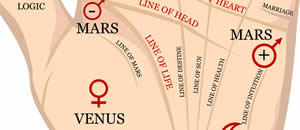
If you are curious enough to read your own palm, you may observe the lines in your palms first. Through observing the lines you may notice the little details that can be found. There are several tutorials online which...
Psychic Readings
Psychics have the ability to gain knowledge using methods that go beyond the five senses. Many people consider it as the 6th sense or ESP. People have been consulting with psychics for thousands of years now...
Palmistry
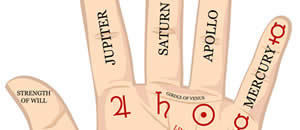
Palmistry begins with the obvious and proceeds, by innumerable intricate steps of judgment and interpretation, to extreme details. Its conclusions are expressed not in terms of certainty but of probability and tendency...